Rosemary oil has been a fixture in hair-growth conversations for a few years now, and unusually for a viral ingredient, there is some actual research behind it. There is also a lot of overstatement. Here is what the evidence supports and what it does not.
What the research shows
The most cited study is a 2015 trial that compared rosemary oil against 2% minoxidil in people with androgenetic alopecia over six months. Both groups saw a meaningful increase in hair count, and the two were statistically comparable at the six-month mark. The rosemary group reported less scalp itching.
Two things are worth noting about it. The study was relatively small, and neither group saw much change at three months. The gains showed up in the back half of the trial.
The proposed mechanism is twofold. Rosemary appears to improve circulation to the follicle, and compounds in it may interfere with the pathway by which DHT miniaturises follicles in pattern hair loss. The second point is less firmly established than the first.
What it will not do
Being straight about this saves money and disappointment.
- It will not regrow hair on a follicle that has been dormant for years. Once a follicle is scarred or fully miniaturised, no topical brings it back.
- It will not work in weeks. Hair grows about a centimetre a month, and the growth cycle means three to six months is the realistic window before you can judge anything.
- It will not fix hair loss caused by something else. Thyroid conditions, iron deficiency, postpartum shedding, protein deficiency and traction from tight styles all cause hair loss, and none of them respond to rosemary because none of them are the problem it addresses.
That last point is the important one. If you are shedding suddenly and heavily, find out why before you treat it.
Traction alopecia
This deserves its own mention because it is common and largely preventable. Repeated tension from tight braids, weaves, locs and edge styling pulls on follicles until they stop producing. It shows first at the hairline and temples.
Caught early it recovers. Left for years it becomes scarring alopecia, which is permanent. No oil reverses that. If your edges are thinning and your styles are tight, loosening them matters far more than anything you apply.
How to use it properly
Rosemary essential oil is potent and should not go on the scalp undiluted. It needs a carrier oil, and it needs to reach the scalp rather than sitting on the lengths of your hair, since the follicle is what you are treating.
- Section the hair so you can reach the scalp directly
- Apply along the partings, not to the ends
- Massage for three to five minutes, which helps circulation on its own
- Leave for at least half an hour, or overnight if your hair tolerates it
- Wash out with a gentle shampoo
- Repeat two or three times a week
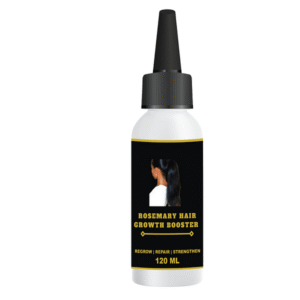
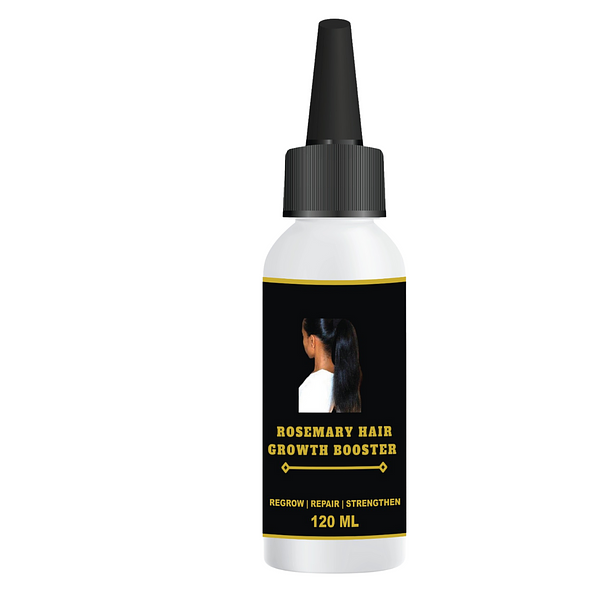
Our Rosemary Hair Growth Booster is blended at a usable dilution, so it goes straight onto the scalp without mixing.
The things that matter alongside it
Topicals work best when the basics are handled:
- Protein and iron. Hair is largely protein, and low ferritin is one of the most common causes of diffuse shedding, particularly in women.
- Scalp health. Persistent flaking, itching or inflammation interferes with growth. Treat that first.
- Tension. Looser styles, and rest periods between protective styles.
- Heat and chemicals. These damage the shaft rather than the follicle, so hair breaks rather than falls. It looks the same in the mirror but has a different fix.
Patch-test first
Rosemary can irritate sensitive skin. Apply a small amount behind the ear or on the inner forearm and wait 24 hours before putting it across your whole scalp. Avoid it in pregnancy without checking with your doctor first, and keep it away from broken or inflamed skin.
When to see a doctor
Sudden heavy shedding, patchy round bald spots, visible scalp inflammation, or hair loss alongside fatigue and weight changes all warrant a proper look. Blood work rules out the treatable causes quickly, and some forms of hair loss respond well to prescription treatment when caught early.
General information only, not medical advice.